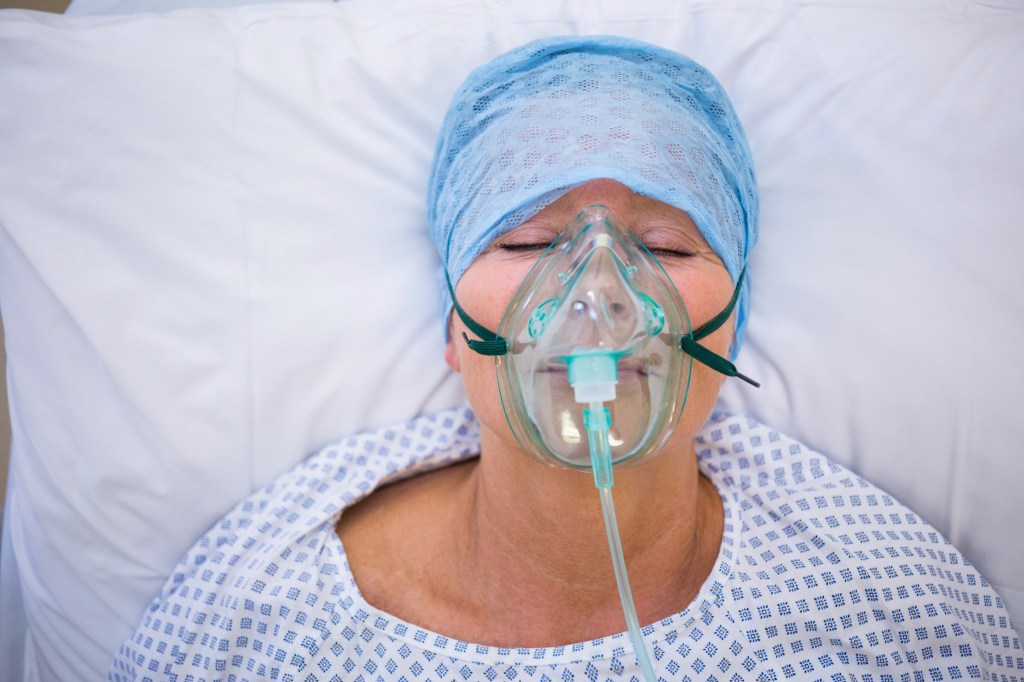
I’m rounding on one of my patients when I hear the dreaded alert tones overhead. “Rapid Response Room 321. Rapid Response Room 321. Rapid Response Room 321.” Oh crap, that’s my unit. I rush to room 321 to see both of my RN colleagues at the bedside fumbling with a vital signs machine. I ask what’s going on and the patient, panic in his face, gasps “I can’t breathe”. The pulse oximeter reads 60% and is continuing to drop. I press the reading on the machine’s display to reveal a perfect pleth wave. This means it’s real. My colleagues have the patient on an oxi-mask and I can hear the whistling of the oxygen indicating they have it cranked up. I trace the mask’s tubing away from the patient to see it ends on the floor. *Immediate face-palm*. Yep- the patient wasn’t receiving any oxygen at all. I quickly connect the oxygen and within seconds see the numbers on the monitor rise. From 66% to 72% to 80% to 87%. His breathing starts to slow. By this time, the rapid response team is arriving, and the room is getting crowded. The house supervisor, doctor, and ICU charge nurse begin asking questions. My two colleagues, both still shaken and also probably embarrassed, stand silently.
Why this is a problem: Hypoxia can cause permanent brain damage, so it is essential to address immediately. If increasing the oxygen flow rate does not help, then the team should be applying more aggressive oxygen delivery systems until the hypoxia is corrected. There were two RNs at the bedside recognizing that this patient was struggling to breathe but neither managed to find and correct such a simple problem. Was it lack of experience? Inability to handle a stressful situation? Panic? Knowledge deficit? The point is- it doesn’t matter. Not to the patient. It is never “wrong” to call for help with a Rapid Response, but this situation could have been corrected so much sooner with a simple, methodical approach. When I found the problem, I was following the acronym VOMIT. Whenever I’m concerned about a patient, I VOMIT.
V- Vital Signs. The patient’s SPO2 was too low.
O- Oxygen. Is the patient on oxygen? Nope. We were oxygenating the floor.
M- Monitor. How does the patient look on the monitor and what is his heart rate and rhythm?
I- IV access. Verify or obtain IV access.
T- Treatment. Correct the hypoxia with prescribed oxygen.
 NOT ALL NURSES CAN SAVE YOUR LIFE
Leave a comment